The Future of Brands: And Rise of the Brand Hero

[…and how to use the SEAR method to create supercharged hero campaigns].

I call most brands ‘net takers’, meaning they take the earth’s resources, reconfigure them into a product, and take our money. Very few brands give back to the planet to the extent they take.

Consumers point to governments to fix the planet, but most governments are broke and in my view are not well positioned to turn the ecological disaster ship around anyway. Brands on the other hand are mostly very well resourced, hold power over the long term, and are experts at persuasion. In my view, the onus on reversing the ecological damage caused by years of mass consumption lies with brands.

Which begs the question: Should brands be held accountable for the footprint they leave, and should brands do more to legitimize their existence?

Let’s start with the obvious one: Are brands responsible for the poor state of our planet? I think no, at least not entirely – in my view all humans are responsible. But brands should bear some responsibility, after all – brands have been convincing consumers to ‘buy more’ for at least the last century. They convince us that our possessions are no longer relevant and that we need to constantly update our belongings (‘psychological obsolescence’). They even purposely produce products with an expiry date to force us to purchase again and more often (planned obsolescence). And of course, we all know it is impossible nowadays to update your phone battery, or repair a variety of other commonly used products because ‘they’ would rather we just bought new (technical obsolescence).

The planet is in a bind – the damage we’ve done is most likely irreversible now – but should we continue to blindly accept the role of brands in this ecological disaster? Edelman’s latest ‘Trust Barometer’ report suggests that consumers are shifting their attitudes: 37% of consumers don’t trust brands, and 46% say they’re not doing enough to address issues like climate change. Fortunately for brands, the same report also suggests that 59% of consumers will pay more if a brand does good in the world – yet so few do!

Are brands toxic?

When a human shows little regard for fellow humans because they’re focusing on themselves, we call them narcissists.  A narcissist is characterized by an inflated sense of self-importance, and this distorted self-view manifests as toxic behaviors. Narcissists seek attention, strive to be ‘number 1’, believe they are the best and convince others of the same. But aren’t these also the standard traits of most brands? Their advertising tries to convince us that they are the best, and of course they seem to exist to outdo their competition. If brands are personalities – as most brand managers believe they are – then the narcissistic tendencies of most brands should make us think.

The opposite of a narcissist is a Hero. Heroes are humble, pro-social entities, tackling problems that matter. They share three common traits: (1) Heroes are role models, providing guidance to others on the best way to live a virtuous life; (2) Heroes are self-less, elevating the needs of others above their own needs often in the face of adversity, and; (3) Heroes are guardians, protecting the needy from evil and injustice.

As it turns out – the best performing brands nowadays embody these heroic traits. Hero brands not only win the best awards, but they also earn tremendous respect in society that ultimately benefits them over the long term. Positioning your brand as a hero increases brand awareness, customer loyalty, and the brand’s ability to generate profits.

Heroes are guardians.

Fictional heroes such as Batman or Wonder Woman exist to protect and save people against wrongdoing, danger, and injustice. Being a guardian and protecting people from threats is a core part of a hero’s character.

For a brand to become a hero through guardianship, I discovered that the person or group being protected by the brand must satisfy three criteria: (1) they must be facing a genuine disadvantage; (2) they should want the threat to stop, and; (3) the disadvantage must be considered genuinely unfair.

If any of these criteria are unmet, then the brand won’t be seen as a hero. For example, celebrities find it difficult to walk around in public while avoiding attention (criteria 1 met) and would prefer they were anonymous (criteria 2 met). But society doesn’t consider the attention they receive when they’re in public as genuinely unfair (criteria 3), and therefore saving celebrities from their public attention issue isn’t a valid way for a brand to earn hero status.

Consider instead Wall Street investment firm Global Advisors who wanted to bring attention to women’s equality and gender diversity in the workplace. This social issue and those affected by it match the three criteria above: the evidence is overwhelming that women face a genuine disadvantage (criteria 1 met), women obviously want it to stop (criteria 2 met), and it is reasonable to expect that at least half of society believes the disadvantage is unfair (criteria 3 met).

Since the three criteria were met, Global Advisors were in a good position to demonstrate heroic intentions. On international women’s day they erected a bronze statue of a young girl, defiantly facing the fired-up Charging Bull of Wall Street. The ‘Fearless Girl’ statue stood for women’s strength and courage in the face of America’s most iconic symbol of economic prosperity – the Charging Bull. The campaign resulted in an additional 152 companies adding a women director, and 34 more with an intention to follow suit. The relatively low budget moral statement earned Global Advisors over 140 million media mentions, and significant credibility within America’s financial world.

When heroes are guardians, they often find themselves battling against powerful adversaries. This gives the hero a chance to demonstrate courage and valor – two further very important characteristics of a hero. I found that hero brands also oftentimes battle powerful adversaries in the name of justice, demonstrating courage and valor.

Carrefour supermarket chain demonstrated tremendous courage and valor battling for change against the European parliament. An archaic European law forbid French farmers from growing 97% of fruit and vegetable varieties. The law threatened biodiversity, unnecessarily increased the cost of agriculture, and deprived consumers of more flavorful varieties. Carrefour defied the law by opening 400 “Black Supermarket” stores across France selling the illegal varieties of fruits, vegetables, and grains. By demonstrating how the world would be a better place without the law, Carrefour won their battle against the European parliament, and the law was eventually repealed. The campaign resulted in 377 million media impressions and propelled Carrefour to the top most preferred supermarket in Europe.

I am not advocating that other brands break the law to achieve their means, but this example does serve to illustrate how courage and valor is an important part of becoming a hero brand, and when done right can start a movement to drive change.

Havaianas lifestyle brand in Brazil also battled a powerful adversary, creating a strong movement to drive change and install fairness. The conservative Bolsonaro government had removed questions from the national census that asked about sexual orientation and gender identity. This decision left the LGBT+ community invisible and threatened their ability to fight for public policies. Further angering the LGBT+ community, the Brazilian government instead ran an independent survey claiming there were only 2.9 million LGBT+ members in Brazil, suspiciously low in a country of 214 million.

Havaianas sprang into action and commissioned their own research, finding the number of LGBT+ people in Brazil was actually 15.5 million. To gain public support, they disseminated their findings through influencers, NGOs, congresspeople, and even other brands. The campaign elevated Havaiana’s image to hero status, earning them 14 million media impressions, and increasing the sales of their Havaianas’ pride collection by 75%.

Guarding the rights of others need not be restricted to humans. Pedigree pet food brand in New Zealand achieved hero status by helping to save the 3000 shelter dogs that are euthanized in New Zealand each year.

The “when they move out, move on!” campaign encouraged empty nesters – parents whose children had recently left home – to replace their recently departed kids with a rescue dog. The campaign featured an online platform that made it easy to search for and adopt a rescue dog, supported by initiatives such as converting the child’s bedding into a dog bed. The campaign increased Pedigree’s sales by 10.8%, and importantly increased dog adoption enquiries by 824%.

Heroes are self-less.

In comic books, heroes will risk their life to save others. But it isn’t the risk to their well-being that earns them hero status, rather its their stubborn willingness to promote the needs of others over their own needs – they are one hundred percent self-less in everything they do.

I discovered Hero brands are the same, acting selflessly to ensure the well-being of others. Hero brands don’t risk their life, but they do appear to act solely on a moral obligation to help others rather than to profit.

Greek confectionary brand Lacta illustrates selflessness well. Lacta wanted to address a sudden rise in domestic violence cases reported in Greece, and so produced a video on the theme that ‘partners aren’t possessions’, and that women in abusive relationships could get help. Not once did Lacta suggest they were addressing an important social issue for self-benefit – yet nevertheless they experienced an increase in sales – a common side effect of behaving like a hero.

If a brand attempts to help those in need, but appears to be driven by selfish needs, then things will most likely backfire and the brand will earn disrespect and criticism from angry consumers. Consider the unfortunate case of Sellitonline – an Australian online shopping website. In 2013 forest fires spread across Tasmania, destroying dozens of homes and hundreds of miles of land. Sellitonline offered to provide much needed electrical generators to those affected, but with a condition: they would base the number of generators they would donate on the number of Facebook page Likes they could get. Consumers interpreted Sellitonline’s plan as profiting from the suffering of others, which resulted in significant negative backlash against the brand.

Korean carmaker Kia made a similar blunder – starting with an admirable quest to feed the starving in war-torn Sudan. The campaign featured an image of a starving Sudanese child with the message “1 Like = 1 Day Food for 1 Family”. The campaign also incited backlash on social media, criticizing the brand for emotional blackmail.

Even though many brands do profit from running a hero campaign, it should never be the main aim, nor should the campaign ever allude to the idea that the brand will benefit in any way. Remaining selfless will accrue benefits to the brand indirectly, eventually increasing brand awareness, trust, and brand love.

Heros are mentors and role models.

Heroes like Mother Theresa or Nelson Mandella inspire and empower others – they’re good role models. I discovered that hero brands are also role models and achieve hero status through effective mentorship.

Consider the lingerie brand K-Lynn. They found that despite breast cancer remaining a serious concern in the Middle East, only 40% of women had ever had a mammogram check. When the women were asked why they didn’t get a checkup, they claimed they were short of time. Yet it was also discovered the same women spent at least one hour a day shopping online. Using this knowledge, K-Lynn devised a way to mentor women on how to do a breast self-check while they were shopping, by changing the typical model poses in their catalogue to instructional poses demonstrating a breast self-check. By mentoring the women about an important health issue, k-Lynn increased their sales by 23%, and increased mammogram appointments at local clinics by 43%.

In action films, there is often a ‘mentor architype’ who teaches and guides the hero to overcome challenges and achieve their goals. They are the unsung hero – the protagonist gets the glory, but it is the mentor that is the real hero. With hero brands, they are often the unsung hero – addressing social issues that are oftentimes unrelated to the products they sell or the services they provide.

Roto tanks for example sells water tanks in Kenya, but wanted to help young children in rural areas suffering from chronic malnutrition – a far cry from their usual mission to provide clean water. Mothers in rural areas had little knowledge of modern postnatal care, and relied on traditional wisdom that was proving ineffective. To teach the young mothers modern nutrition principles, Roto tanks printed lessons and nutritional guidance on the traditional slings the mothers used to carry their children around. Staying true to their role model status, campaign success metrics focused on human impact rather than traditional profit focused analytics, benefiting 90,000 children and reducing reported cases of severe malnutrition by 10%.

Another way hero brands demonstrate mentorship and become role models is by taking the lead on an issue within the industry they operate in. Hero brands recognize that they often leave a negative footprint on society, and that they may contribute to mass consumerism through their advertising – in all bad for the planet. By demonstrating a commitment to preserving the integrity of the industry they operate in, hero brands earn respect from their competitors, in addition to signaling to consumers that integrity is a core part of their character.

Like many FMCG brands, Corona beer had made it their mission to improve their packaging and make it plastic-free. But they didn’t stop there. Taking a lead in their industry to reverse the damage caused by plastic, they also planned how they could reduce the 14 million tons of plastic floating in our oceans. Their solution was to run global ‘Plastic Fishing’ tournaments, whereby fishermen were incentivized to catch plastic instead of fish, and sell the plastic to recycling companies. The campaign not only helped reduce the plastic footprint extracting over 200 tons of plastic, but also boosted the brand’s positive sentiment on social media channels by an historic 98%.

It is not only FMCG brands that can demonstrate leadership in this way. The New York Times sought to be leaders in the integrity and authenticity of information in times where fake news and disinformation is rife. They proved their commitment to getting at the truth by producing footage showing what it’s like to be a NYT reporter. The footage demonstrated the extraordinary lengths NYT reporters go to uncover the truth on big social issues like counter-terrorism, refugees, and climate change. The campaign was extraordinarily successful, resulting in a 100% increase in NYT subscriptions.

Sometimes a role model strategy adopted by a brand appears counterintuitive to the corporate mission, but this can earn great respect from the public. Creating an ironic contrast in marketing is powerful.

Take for example Ikea, and their ‘Cirkulär’ campaign that encouraged consumers to purchase used Ikea furniture over new. The campaign began on Black Friday when most brands were encouraging consumers to buy and save. Taking a different tact, launching with the message “save more than money” Ikea signaled to consumers that although it was okay to buy up big over the sale period, we shouldn’t forget that mass consumerism comes at a cost to the planet, and we should therefore buy second hand. The initiative earned Ikea a 17% increase in brand desirability. 

Creating a Hero campaign: The SEAR Framework

Brands earn hero status through their actions. I learned that running marketing campaigns that demonstrate the brand’s commitment to strong moralistic principles, and an affinity towards social justice is the most direct way to build hero brand status.

To help guide brands when creating a hero campaign, I developed the “SEAR” framework. The framework includes four necessary conditions to ensure the success of a hero campaign, including: (1) Severity: The issue needs to be severe enough for people care about it; (2) Effort: The brand must be able to demonstrate considerable effort towards solving the issue; (3) Affinity: The brand must demonstrate a desire for justice, and; (4) Reach: There needs to be sufficient volume of people who are affected by the issue.

The success of a hero campaign is contingent on satisfying each of the four criteria – if one fails, then the entire campaign won’t be seen as heroic.

Severity

Creating a hero campaign begins by identifying a problem in society that is severe enough for people to care about. The litmus test for identifying a sufficiently severe social or environmental issue is that consumers must view it as a genuine threat, either now or in the future. If the public doesn’t understand the severity of the issue, the campaign will likely fail to meet its objectives.

Protein World is a brand that misjudged the severity of an issue they sought to address, that ultimately resulted in backlash from the British public. They sought to address the issue of obesity and poor health in the UK, devising the “Are you Beach Body Ready?” campaign. The campaign featured advertisements depicting a fit looking Australian bikini model placed throughout London’s Underground train stations. The campaign unleashed significant backlash from the British Public who saw the campaign as body shaming and unfairly targeting women’s bodies. Basically the public didn’t think it was a severe issue.

Sometimes the brand identifies a severe issue in society, but the public needs educating that the issue is indeed severe.

Consider the dishwasher brand Finish, and their quest to save America’s water. Most Americans turn on the faucet and think nothing of it – yet in reality 40 out of 50 states are expecting a water shortage in the next decade. Finish ensured the public understood the issue was severe by partnering with National Geographic to produce footage that educated America on the severity of the impending water crisis. The campaign encouraged people to ‘skip the rinse’, and provided evidence that rinsing the dishes before loading them into the dishwasher was unnecessary when using Finish. The campaign was a huge success, increasing sales by 33%. But without educating Americans about the water crisis, Finish’s quest to save America’s water might have fell on deaf ears.

Effort

Hero brands demonstrate determination, dedication, and a commitment to helping others. From the public’s perspective, it looks like the brand is expending considerable effort in their quest to help solve a severe social issue.

Picture a firefighter attempting to save the occupants of a house on fire. The firefighter won’t be seen as a hero unless they do their absolute best to save the people inside. Giving up too early not only forfeits any associations of heroism but may also breed resentment from onlookers disappointed in the firefighter’s lack of determination.

Lacoste and their mission to help save endangered animals illustrates how poor effort can backfire and fail to create a hero brand. To make a statement and signal the importance of saving endangered species, Lacoste changed the traditional crocodile logos on their polo shirts to include endangered animals. The brand came under fire when it was discovered they continued to sell gloves and bags made from various kinds of animal leather while running the campaign. Although Lacoste had identified a severe problem, they failed to go all-in and demonstrate extraordinary effort towards tackling the issue.

I found that hero campaigns oftentimes tackle big problems such as fixing the environment, reducing poverty, or changing cultural norms. But that they do not need to actually solve the problem – it is sufficient instead to simply demonstrate considerable effort.

Supermarket brand Tesco for example chose to address plastic pollution in Malaysia. But rather than attempting to tackle the issue directly, they instead focused on what they could control – the use of plastic bags in their own supermarkets. In a simple but effective campaign, Tesco encouraged their shoppers to bring their reusable bags with them when they shopped by printing discount codes on the bags. The simple initiative was enough for the brand to demonstrate their commitment towards reducing the harmful effects of plastic on the environment, resulting in the greatest reduction in single-use bags in the brand’s history.

Sometimes simply making a powerful statement is enough to demonstrate effort. Dicks Sporting Goods (DSG) for example wanted to help tackle the problem of mass shootings in the USA. Obviously stopping mass shootings is a huge undertaking for any brand, and so rather than trying to stop the problem directly, DSG instead made a statement by destroyed $5 million worth of assault-style rifles. DSG were expecting some backlash from gun enthusiasts, but although sales dropped in the short term DSG quickly recovered sales to higher levels in some stores than before the guns were destroyed. The campaign showed DSGs commitment and effort towards fixing the issue by demonstrating that DSG were willing to self-sacrifice for the benefit of others.

Affinity

Affinity is a key element in the Going Viral marketing framework, and I found evidence of it amongst hero brands and their campaigns. Affinity is a feeling of warmth, respect, or deep appreciation for an activity, idea, or object. In other words, for something to go viral, it needs to make people ‘feel’ something. A marketing campaign that has high affinity is highly relevant to the target audience, while a campaign with low affinity is seen as irrelevant.

To illustrate failure caused by a low affinity campaign, consider Mark Zuckerberg’s decision to make available a 360-degree virtual reality fly through of Puerto Rico right after they suffered a disastrous hurricane. His intention was genuine – to help aid Puerto Rico’s recovery. But instead he drew significant backlash since it looked like he was actually promoting disaster tourism and his new social VR tool ‘Spaces’ that was enabling the experience. By failing to demonstrate exactly how Facebook was going to help, they failed to create the necessary affinity required to make the campaign a success. People couldn’t see the relevancy of Facebook’s actions.

The most common way to exaggerate the affinity in a hero campaign is to position the brand as a justice seeker, since almost everyone has a natural tendency to value justice.

In the ‘Paving for Pizza’ campaign, Domino’s Pizza partnered with local governments to fix potholes in the roads. Road potholes not only contribute to car repair bills, but they also breed resentment against local governments for not maintaining the roads. Although Domino’s jokingly commented they fixed the roads to protect the pizza’s from being knocked around on delivery, to consumers it appeared that Domino’s was improving people’s environment where local governments had failed. The sense of justice achieved by the campaign drove its success.

A sense of justice, and therefore affinity, can also be achieved by challenging a powerful adversary in the name of change.

Consider the campaign run by Grupo Estratégico PAE in Honduras, that aimed to overturn a national rule prohibiting the use of the morning-after contraceptive pill. Prior to the campaign, one-in-four women in Honduras gave birth before the age of 18, yet the morning after pill that could have lowered adolescent birth rates was made illegal. Grupo Estratégico needed to battle the Honduras government to make the morning after pill legal again, and so they developed a campaign that featured a floating dispensary in international waters where women could obtain the morning after pills legally. The boat ride out to the island gave Grupo Estratégico the opportunity to create powerful story-like footage of the women, that went viral helping Grupo Estratégico to gather two-million signature petition. The campaign was successful and in 2023 the Honduras government repealed the law banning the morning after contraceptive pill.

Reach

The last element necessary for the success of a hero campaign is reach – a hero campaign needs to reach a significant number of people to be effective.

I discovered that there are three criteria underpinning the campaign’s ability to reach enough people to be effective. First, most people need to have heard about the social issue. Second, most people must recognize that the social issue negatively impacts society. Third, the social issue should affect a significant number of the brand’s customers.

If these conditions are unmet, then the campaign will struggle to reach enough people. Consider the example of Ink Coffee – an upmarket café chain from Colorado. The brand believed they had a noble cause improving neighborhoods through gentrification, posting a sandwich board outside one of their cafes exclaiming “Happily Gentrifying The Neighborhood Since 2014.” However, Ink Coffee misjudged the value of their presence, since most people saw gentrification as a problem, not a solution, associating it with homelessness and displacement. They failed to satisfy an important condition when running a hero campaign: people didn’t agree that a problem existed.

One way to boost reach from a campaign is to ride the wave of related attention. This can be achieved by associating the brand and the brand’s cause to an event that is already being publicized.

Take for example the Brazilian soda brand Guaraná, who fought for gender equality. They learned that the prize amount given to women footballers in Brazil was the same amount as the men were given in the 1980s – a clear disparity. To reach enough people with the campaign, Guaraná dressed players from the national team in 1980’s apparel at the Tokyo Olympics, and relaunched their beverage in the same bottle used in the 80s. Since the spotlight was already on the football team and the Olympics, Guaraná was able to generate significant exposure to their cause, reaching millions of people around the globe. The reach from the media attention was enough to get a rule change mandating equal prizes for all genders.

There is no doubt that the world could be a better place. But it is wrong to leave that responsibility to governments and charities – the responsibility lies with all of us. In many ways, brands are in the best position to address social and environmental issues – they’re usually better resourced than most activist groups, and they’re usually competent persuaders.

In many ways brands are like people – they have personalities, they want love, and they want to look good. But not all brands are like good people – no-one likes a person who exists to serve themselves get attention. A good person, just like a good brand, has a far deeper appreciation and understanding of their role in society. Good people, like good brands, ask themselves “How can I be a better person?” and this starts by striving to be a valued member in society.

Hero brands understand the impact they have on the planet, take responsibility for their footprint, and have a strong sense of world community. Maybe it’s time for all brands to become a hero.

About this research

A hero brand is defined as: a company that has an ethical ideology integrated into their corporate strategy that includes a desire and willingness to promote the needs of others over their own needs, and serve the planet through altruistic social responsibility. The SEAR framework was developed by identifying hero traits amongst the winners and near winners of the Cannes Lions awards from 2019 to 2023, and analyzing commonalities in their strategies to achieve noble heroic goals.

Why Can’t I Get Anything Done?

People are working from home, but can’t concentrate. And it’s not the kids or the dog.

The last remnants of an analogue social life have been yanked away. For now at least. Of course, we’ve been replacing face-to-face communications with digital devices for a while now. But no one fully understood the privilege of real-world social encounters, until now.

When the lockdowns first started, many people were secretly pleased. They could get more done, save time for reading, or maybe take an online course. Those jobs where people could work from home were revered – wouldn’t it be great not having to commute!

Yet people are struggling. Our survey of workers new to working from home has discovered a pattern of idleness and inactivity. Why are people struggling to concentrate and get anything done?

There’s a lot of advice out there about avoiding distractions when working from home. The shrill of kids playing and barking dogs makes it difficult to get much done. But it’s not all about distractions. The fog of apathy is usually caused by anxiety. Everyone knows there’s a silent killer out there – but no-one knows how it will end.

According to psychologist Dan Grupe from the University of Wisconsin-Madison: “Uncertainty diminishes how efficiently and effectively we can prepare for the future.” Uncertainty fuels anxiety.

He goes on to say, “Unpredictable threat cues produce anxious risk assessment behaviour that is likely to persist until such uncertainty is resolved”.

Mary, a legal clerk from Brisbane, fits Dr Grupe’s explanation: “I just feel so unfulfilled at the end of the day, always doing less than I had planned. I keep thinking about what might happen.”

Some people are more affected by anxiety than others:

“It’s not just my work – I’m finding it hard to finish watching a movie! Never mind my plans to practice guitar. I’m actually falling behind” says Michael, a marketing assistant from Melbourne.

Anxiety doesn’t always induce apathy. In fact, a moderate amount of anxiety is good for performance. But it’s a ‘U’ shaped curve. Anxiety boosts our alertness up to a point before it begins to erode performance.

The problem starts when anxiety is too high or sustained over long periods. The result is restlessness, irritability, and procrastination. Eventually it leads to poor coping strategies, and messes with people’s ability to control their emotions. Animal researchers have observed strange behaviours when animals suffer sustained anxiety, including bite tendencies and compulsive licking. If you corner a stressed animal, they snap.

Strategies to Get Back Your Concentration

The dominant theory for why anxiety ruins our concentration suggests that anxiety uses up thought capacity by hogging brain resources. Our minds tend to wander to the same thoughts over and over, making it difficult to concentrate.

We can’t remove our uncertainty, but we can try to control our thoughts.

Think comparative thoughts.

People have a natural tendency to focus on the bad, and overestimate how likely a bad thing will happen to them. Thinking positive thoughts helps reduce anxiety, but it’s not easy when you’re constantly reminded of COVID-19 on the news.

One strategy to deal with our tendency to focus on the bad is to put things in perspective. Some people find that watching prison or war documentaries helps blunt the sharpness of their own predicaments. Others make a list of everything that’s good in their lives and compare it with the bad.

According to John Hopkins University data, the recorded mortality rate of COVID-19 in some countries could be over 10%. But remember that on average 90% of people who catch coronavirus survive, which doesn’t sound as bad as the Spanish flu which had a mortality rate of 50%. Making a habit of comparing your thoughts to more extreme circumstances helps you to keep things in perspective.

Staying social.

Humans are social animals, and it seems we’ve been forced into isolation. But we’re not completely blocked from being social. We can converse with others online, or even in pairs when exercising. One strategy that clinical psychologists use to help anxiety sufferers is getting them to express their ideals, values, convictions, identifications, and meanings. Expressing your feelings to others reduces the sting of those thoughts that are troubling you the most.

Use your social time to share your feelings and concerns, and you’ll soon find it easier to put those troubling thoughts aside.

Tackling the easy tasks first.

One of the unusual things about anxiety is that although it can impair your ability to concentrate, it can also improve the performance of habitual tasks that don’t require much thinking.

Divide your day into easy tasks and hard tasks. Get the easy tasks done first, or if you find yourself struggling on the hard tasks switch to the easy tasks. Feeling like you’re getting stuff done gives you a sense of purpose – and feeling a sense of purpose makes you feel more in control, reducing anxiety.

Live Healthy.

It’s a cliché: a healthy body makes a healthy mind. But it also reduces anxiety. There’s a tendency for people in lockdown to drink more alcohol, stay up later, and forgo exercise. But each of these contributes to anxiety, worsening your ability to concentrate. Try to set a healthy routine, and push yourself to get outside each day.

We are our own enemy

Silent threats attack by proxy. Catching COVID-19 will most likely put you off your work for a while. But so will merely thinking about catching it.

In ancient times the purpose of anxiety was to help us deal with predators. Anxiety energised us to fight or run away. But problems like COVID-19 are not something we can easily run away from. A small percentage of the world will unfortunately catch the virus. But many more will suffer from their thoughts.

Economic Suspension: What It Is and Why We Urgently Need It

It was only a month ago when Scott Morrison boasted about his plans to watch his beloved Sharks team play in the NRL. Since then, the country has been whammied with an unprecedented social lockdown. The result has been an economic catastrophe, with scenes of the great depression in colour as thousands joined queues outside Centrelink offices across the country.

In response to the crisis, Treasurer Josh Frydenberg advocated ‘cryogenic suspension’ as the solution, suggesting drastic and unprecedented planning was underway. The term cryogenic suspension was quickly replaced with ‘hibernation’, maybe because it sounded more friendly and less panicked. But perhaps more likely because it became clear that the government didn’t have the power to completely freeze everything.

What the government actually did was inject liquidity into the market, offering tax incentives, one-off payments, and subsidizing wages for jobs that were rapidly disappearing. These broad-based economic stimuli are like a turbo-version of the usual fiscal measures taken by governments during deep recessions. They’re designed to get consumers shopping again, thereby getting more money to businesses, and therefore more jobs to pick the economy up again.

But here’s the problem: This isn’t a normal recession. Normal recessions are caused by consumers losing confidence: Consumers spend less, buy cheaper options, and defer purchases to the last minute because they’re worried about the future. This time around consumers didn’t stop buying because they were doubtful about their future, they stopped buying because they were forced to stop.

Broad based stimulus packages to entice consumers to start shopping again won’t be as affective in today’s situation, because it’s not that consumers don’t want to go shopping, it’s that they can’t go shopping. Recent data from trend analysists Glimpse is consistent with the types of things you’d expect people to buy in a lockdown – home fitness equipment, bread makers, and external monitors for their laptops. That’s about the extent of it – things like holidays, cars, and even buying new outfits are either impossible or suddenly unnecessary, even if consumers had the money for it.

The current situation is not an economic slowdown – it’s a cultural and economic catastrophe that requires disaster relief measures that have never been tried before. The government is suffering a double whammy – on the one hand they need to salvage as much of the economy as possible, and on the other they have an expensive and resource intensive health issue to deal with. It’s starting to look increasingly uncertain they can adequately deal with both problems at the same time, especially if this drags on.

The bailouts we were given might look like they benefit consumers, but the reality is they are designed to prop up businesses, with the hope that when the health crisis is resolved the economy can be revved up again. But it’s a weak solution – citizens are losing their jobs en masse, fearful about keeping their homes, and dipping into their superannuation funds to pay bills they can no longer afford. The government can’t rely on consumer spending to soften the blow. Giving handouts to businesses so they don’t fire anyone is almost pointless if there are no customers for them to serve.

Josh Frydenberg actually had it right the first time – the correct solution is to completely freeze everything, or as he called it: cryogenic suspension. For literal preciseness, I call it complete economic suspension.

A complete economic suspension would mean immediately freezing all rents, loans, taxes, mortgages, and supplier invoices for a fixed period, likely several months. During this time, businesses and individuals do not need to pay any bills, and no interest is charged. Essentially the government freezes all economic activity, except for those activities necessary for survival. The government subsidizes basic needs including food and medical expenses, like they are doing now. But nothing else.

At the end of the hibernation, on a set date after the health crisis is contained, the economy is turned on. People go back to their jobs and start paying their bills again.

With a complete economic suspension, the government does not need to entice consumers to start shopping again using traditional stimulus measures. Critically, the freeze gives those who have lost their jobs and those businesses under threat valuable time needed to reorganise, reskill, and pivot. The world not only needs help to survive, it also needs time to adjust.

The alternative to not suspending the economy is grim. Likely the government will be forced to implement further fiscal stimulus packages, raising more debt and widening the poverty gap. Jobless rates will steadily rise as the inevitability of business closures accelerates over time.

It will be some time before Scott Morrison can ever boast again about his beloved Sharks. The real problem is not when things will get better, but how long it will take.

The former Prime Minister Bob Hawke, following Australia’s victory in the 1983 America’s Cup, famously said: “Any boss who sacks anyone for not turning up today is a bum.” The cheerfulness of his threat is unfortunately prophetic to what is desperately needed now for us to get through this. The government needs to suspend the economy now, before it’s too late.

How to Choose the Best Marketing Keynote Speakers for Your Event

This article is to help conference organisers, event organisers, and agents to find the best marketing keynote speakers they can afford.

It isn’t my intention to self-promote myself – I don’t need to. There is enough biased information out there already. Which is actually the problem. People recommend their friends, agents put forward the ‘safest’ speaker, and event organisers choose the person with the slickest showreal (I’m sorry if this is you!). None of which is the best strategy for hiring the best marketing keynote speaker, as I’ll explain below.

I’ve seen dozens of marketing keynote speakers over the years, some great, but so many times I’ve sat in the audience and thought to myself – Wow. This person is definitely not a good fit for this event.

Don’t get me wrong, when I first started out keynoting I was also not that great – even with training and ‘exclusive’ status at Australia’s top entertainers agency, I was sometimes assigned to events that I knew I was not the right person for. I don’t envy the people whose job it is to hire event speakers – the risk of hiring the wrong person falls directly on them – they have a lot to lose.

So how do you find the best marketing keynote speakers for your event? Here’s what I’ve learned after a decade of keynoting, and how you can do better hiring the best speaker for the job.

Read on, I’ll let you in on a few secrets.

Why you need to be careful when hiring a marketing keynoter

When I first started keynoting, I was hired to speak at an event on viral marketing – my area of expertise. There was another guy who was speaking directly after me on the same topic – viral marketing. At that time (maybe even now), not many people knew too much about viral marketing, so the event organiser must have been under a lot of pressure to find people.

After my presentation, I stuck around to hear the other viral marketing speaker.

I squirmed in my seat. What he’d done was skim read someone else’s book – actually a colleague of mine in the US whose work I know well – and basically made out it was his own. No acknowledgement that it was someone else’s work at all – he had made it his own, and it was difficult to watch.

He might have gotten away with it, but he messed up. Turns out he didn’t read my colleague’s book carefully enough, or perhaps didn’t understand it. Much of what he was saying either fell flat or didn’t make sense. What he also didn’t realise is that a big portion of the audience had also read the book – it was an international best seller at the time. The audience was murmuring, and I could tell they were annoyed. I felt sorry for the event organiser.

Unfortunately, I’ve seen similar situations too many times. As an academic, it’s my job to read a lot, and know where ideas come from (plagiarism is a serious business in academia). It’s pretty obvious to me when someone has plagiarised ideas, or someone else’s presentation. It’s often also obvious to the audience – more than you think. It’s okay if the speaker acknowledges where they got their ideas from, but I suppose many speakers prefer to ‘fake it until they make it’ and are under pressure to sound better than they actually are.

I’ve seen keynoters pull other people’s ideas from YouTube, or worse copy slides from Slideshare countless times. I even remember my agent one time telling me it was common practice. But it’s not just an ethical issue, the audience are often not that naïve – they also watch YouTube and can sense when someone is full of it.

The delegates are there to hear something new and original, just as much as useful and actionable, we owe them that. Unfortunately, there seems to be a lot of keynoters out there who are desperate (or lazy) enough to copy other people’s work.

The Different Types of marketing keynote speakers

The first thing to understand is that there are different types of marketing keynote speakers. It’s critical you know the different types, so you know who is best for the situation. You don’t want a deep technical discussion when the delegates have just finished drinks, and you don’t want an excited-game-show-host when the delegates are there to learn actionable insights.

The Futurist

Futurist conference speakers are prophetic, and usually motivational. They offer insight into what’s to come, with messages about remaining competitive, preparing for catastrophe, becoming more innovative, or sometimes just to wow the audience with technology that no one has heard of yet.

Because they’re futurists, conference organisers sometimes make the mistake of assuming they know about marketing. They assume anyone who knows how to predict the future must also know a lot about how to sell online. Sounds ridiculous right? But it happens.

Futurists are excellent for events when you need to inspire and motivate the crowd. But don’t count on much in the way of useful actionable insights. As an academic I’m probably more critical than most – to me it all sounds like fluff (sometimes absurd rubbish – sorry to my futurist friends!). If you’re looking for a good futurist, try to get someone who already has a name for themselves. The audience is frequently more sophisticated than you think, and if their expectation is to actually learn something useful, after the hype has worn off they’ll probably feel let down.

The ‘Excited-Game-Show-Host’

There are a lot of these. These are keynoters who are almost pure entertainment, while trying to impart some deep new knowledge (i.e., fluff 😊 sorry again). Great for waking the crowd up in the afternoon, or getting people inspired, but again – you need to make sure it’s a good fit for what the audience is expecting.

Excited-game-show-hosts do things like make the audience stand up and dance, make them feel good (or embarrassed), and are generally quite a lot of fun. But beware – ask yourself would you really hire someone with purple hair who looks like a Gym instructor with an inspirational message on their t-shirt consult on your business? (This is accurate – sorry if this is you 😊).

If it’s an event where the delegates actually came to learn something, after the adrenaline wears off they’ll also leave disappointed. Excited-game-show-hosts are masters at making people feel inspired and empowered, which might be a good thing in some circumstances, like after drinks or dinner. But be prepared for anything from ridiculous fanciful absurd content to something that resembles an aerobics session (again, true story…).

The Practitioner

These are people who work in industry as marketers. They often do keynotes for free to promote their brand, or perhaps because they’re looking to become more professional at keynoting.

Practitioners are great at sharing real world practical advice on what they’ve done in their jobs, but they’re usually not as good as professional keynoters at presenting, and usually what they have to say is pretty run of the mill kind of stuff, not really anything new or inspiring.

The problem with practitioner speakers is that you’ll get a large proportion of the audience who are bored to tears, because the speaker is simply regurgitating what they already know. You will get some people in the audience who appreciate what the practitioner has to say, particularly trade style conferences where everyone is interested in what everyone else in their industry is up to. And of course, delegates who don’t know much at all. Also, practitioners are relatively cheap or free.

The Academic

Yawn. Sorry, that probably sounded a bit mean. And, Yes, I am an academic, and probably bored the crowd early in my career also. The problem with academics is obvious – they have deep knowledge on the subject, but they just don’t know how to implement in practice since they rarely have any practical experience. Or, worse, sometimes what they’re talking about has almost no relevance to practice – too theoretical, or just plain confusing.

Some academics are great keynoters. Just be careful they’re not too out of touch with what’s going on in the real world!

The Author

Many marketing keynote speakers have also written a book(s) – it seems to be a rite of passage nowadays to claim legitimacy and credibility as a keynoter. But it’s pretty easy to claim to be a ‘bestselling author’ – there are so many lists out there you’re sure to be bestselling on one of them, so you can take that claim with a grain of salt.

The best signal of how good the author is, is the publisher who published their book. It’s incredibly difficult getting your book published by a reputable international publisher. If the person has published with a mainstream international publisher, then it suggests their ideas are unique, insightful, and pretty good.

Many keynoters claim to be authors, when all they’ve done is self-published, which pretty much anyone can do. Getting published in Australia is also a lot easier than getting published internationally.

Authors (good ones) usually make excellent keynote speakers because they’ve had a lot of experience on stage promoting their book, and usually what they have to say is pretty good.

Perhaps no surprise, the best keynoters I’ve seen are also great authors.

The Celebrity

I don’t have much to say on this, other than I’ve never seen a celebrity who was terrible, which probably explains why they’re a celebrity. Obviously, you need a very big budget to afford celebrities, so if you have that budget go ahead. The other benefits of getting big names in is that they help to draw delegates and registrations.

The best celebrity speaker I’ve seen is Bill Clinton. That statement doesn’t help you much, unless you want to hire him, but just thought I’d get that out there 😊

How to choose the best keynoter

Use an Agency

Using an agency like ICMI or Saxton has advantages and disadvantages. I’ve been a member of both, and an exclusive for ICMI in the past.

The main advantage is the agent is going to recommend someone they know is low risk, since they’ve worked with them before and know how good they are.

The main disadvantage is that the person they recommend is sometimes not the best, since they tend to have a narrow pool they choose from. For example, they’ll push the motivational type keynoter into jobs that are more suited to educators, because it’s better to at least entertain the audience than it is to recommend someone untested who turns out to be a dud. They have to minimize their risk also.

The other obvious disadvantage is cost – agents charge around 30% on top of the keynoter’s fee. I have heard from senior people in the industry that some agents pump up the commission way higher than 30% since you and the keynoter are blind to the costs, but I can’t verify that. Most agents are completely legit.

Do an Internet Search for Marketing Keynote Speakers

The advantage of searching for a marketing keynote speaker yourself on the internet is that you get more variety – there are obviously a lot of public speakers and keynoters out there.

The disadvantage is that you don’t really know how good they are. They might have flashy websites and fancy showreels, but in my experience the terrible keynoters look just as good online as the best keynoters, so it’s hard to know.

There are a few “best keynoter” lists on the internet, but if you look carefully you’ll see the lists are produced by keynoters themselves. To be fair, some lists are legit, but frankly most I’ve looked at are either keynoters recommending their friends, or keynoters recommending people to position themselves by excluding the best.

It’s common practice in keynoting circles to band together in groups and recommend each other – if you’re not in their group then they don’t recommend you, no matter how good you are. Kind of a circle jerk where they all benefit each other.

Search for a Marketing Keynote Speaker on LinkedIn

Almost all marketing keynote speakers will have an active presence on LinkedIn. In my view this is the best way to find the right marketing keynote speakers for the job. Here’s a list of advantages:

  1. You get easy access to a wide variety of keynoter types
  2. By hiring direct you don’t have to pay a commission – most legitimate keynoters handle direct bookings, and it’s rare for them to have an exclusivity agreement with an agency
  3. You can verify them by seeing what content they post

Let me expand on this last point. Almost all marketing keynote speakers will have an active presence on LinkedIn. And they all post self-promotional type materials, so you can get a good sense of what their knowledge is, their charisma (marketing keynote speakers tend to post a lot of video), and what sort of engagement they get.

When you’re evaluating their content, look carefully at the types of things they post – if it’s fluffy pie in the sky oversimplifications of complex ideas, red flags should go up. Good marketing keynote speakers don’t post flaky video anecdotes about how the tide coming in is like your business cycles, or this giant chess game is like your competitors. Nor do they post obscure quotes from famous people.

The best marketing keynote speakers tend to post original insightful content that tends to get a high amount of engagement. This is a direct reflection of how good their presentations are on stage.

Keynoting is not for everyone, but everyone wants to be a keynoter. This makes it difficult to choose the best keynoter for your buck.

I hope my advice is useful. Good luck with your search!

Will Coronavirus Cause a Global Recession?

As of 26 February 2020, the Coronavirus continues to spread globally. News about the virus is not only harming people, it’s also affecting the global economy.

But will coronavirus cause a global recession?

Here are some recent statistics compiled by Statista on the effects coronavirus is having on the stock markets and industry. If these trends are indicative of global economic health, they might signal the beginning of the next global economic correction cycle (recession).

Many economists believe the world is long overdue a global recession. They occur in cycles, usually about 10 years apart, and the last one we had was in 2008.

Figure 1 shows how fast coronavirus is spreading. As at 24 February 2020, there are almost 80,000 reported cases of coronavirus worldwide. And it doesn’t seem to be slowing down.

Confirmed coronavirus cases as at 24 February 2020
Figure 1: Confirmed coronavirus cases as at 24 February 2020

Figure 2 shows a disturbing increase in market volatility, most likely caused from the uncertainty surrounding coronavirus and the impact it’s having on industry.

The VIX Index measures expected volatility over a 30-day period. The data suggests that the current volatility is extremely high. A VIX score over 20 (currently 26.5) is considered abnormally high.

Financial volatility is thought to be a direct signal of an impending financial crisis.

Market volatility since news of coronavirus emerged
Figure 2: Market volatility since news of coronavirus emerged

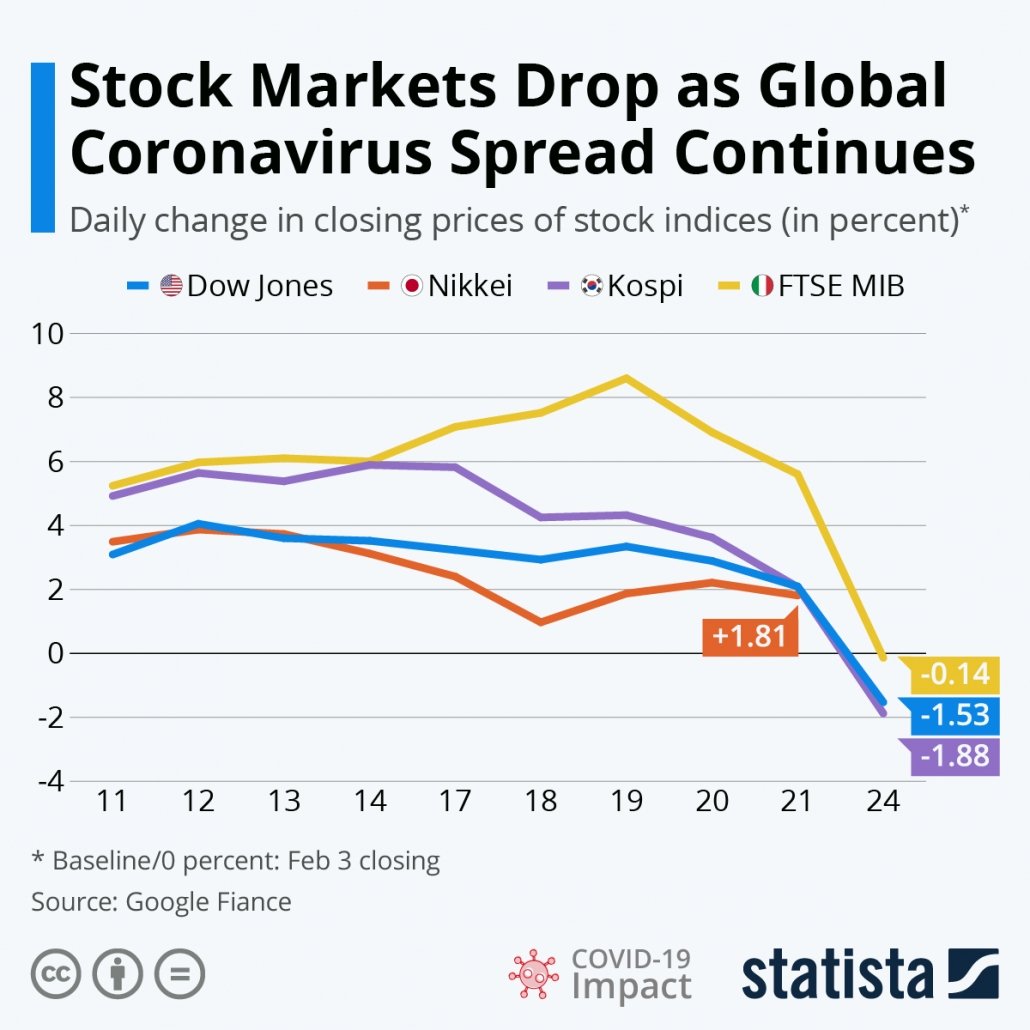
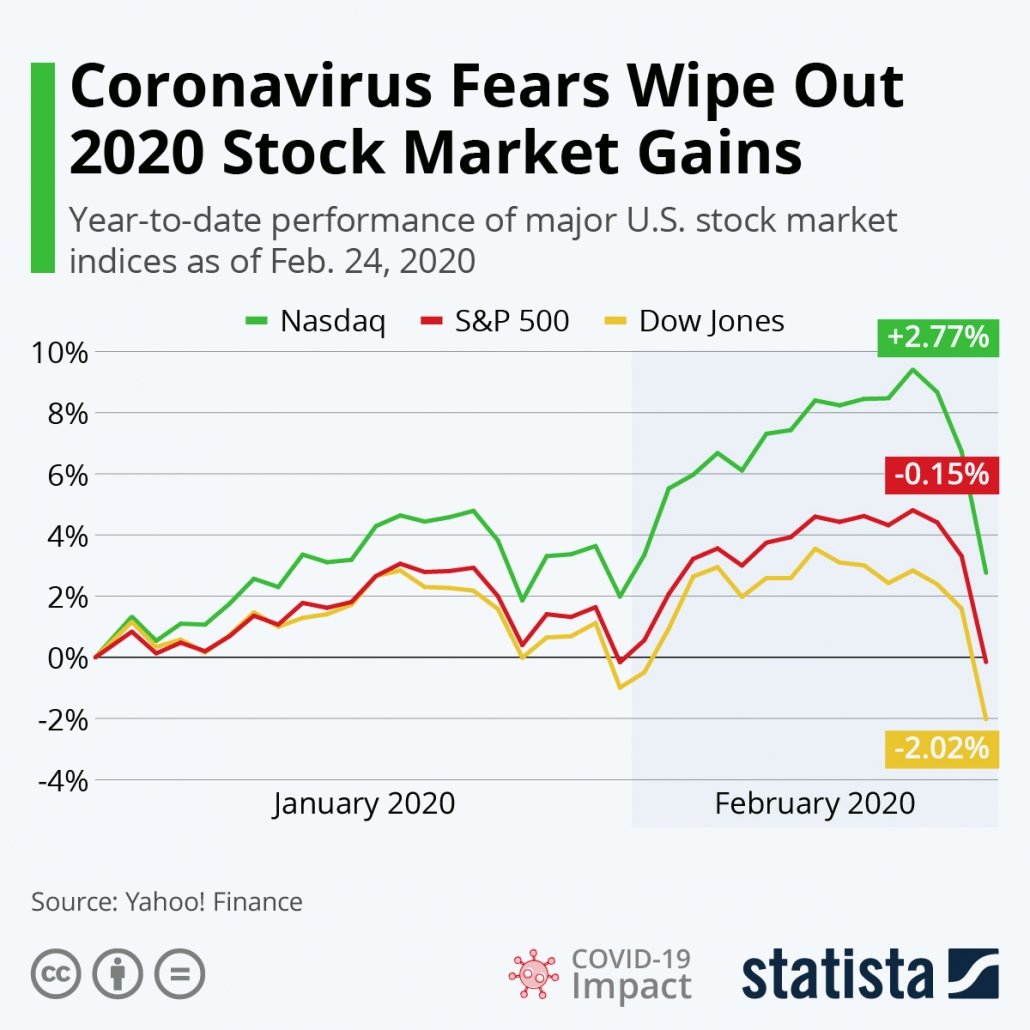
Figure 3 shows what has happened to mainstream stock markets, with one index recording the biggest one day drop in the past 10 years.

Stock markets negatively affected by coronavirus
Figure 3: Stock markets negatively affected by coronavirus

Figure 4 puts the stock market effects in perspective, suggesting market uncertainty has retraced the gains made in the first half of the year. The Dow Jones Industrial Index recorded it’s 3rd biggest single day drop in the history of the index.

Steep drops in market indices as a result of coronavirus uncertainty
Figure 4: Steep drops in market indices as a result of coronavirus uncertainty

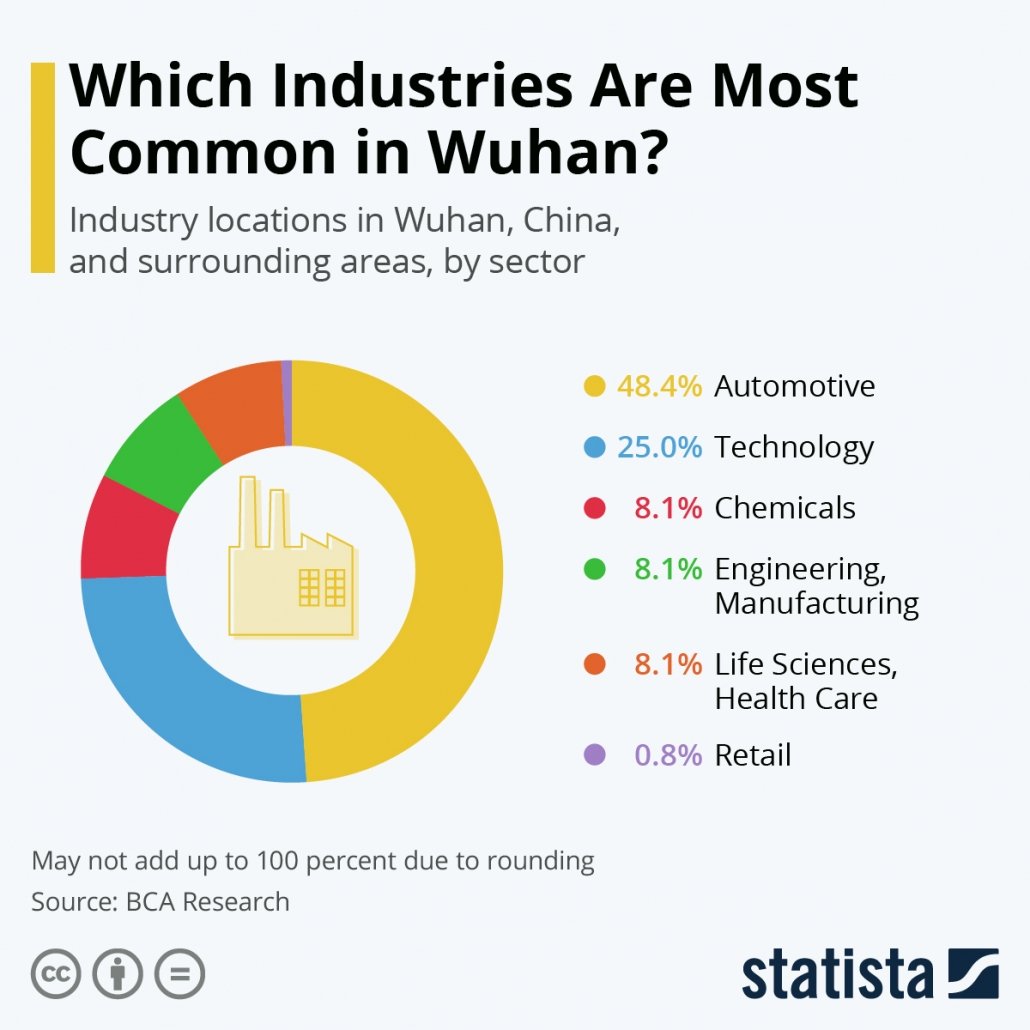
Figure 5 shows which industries are most common in Wuhan, the epicentre of the coronavirus, now in lockdown.

Wuhan industry sizes
Figure 5: Wuhan industry sizes

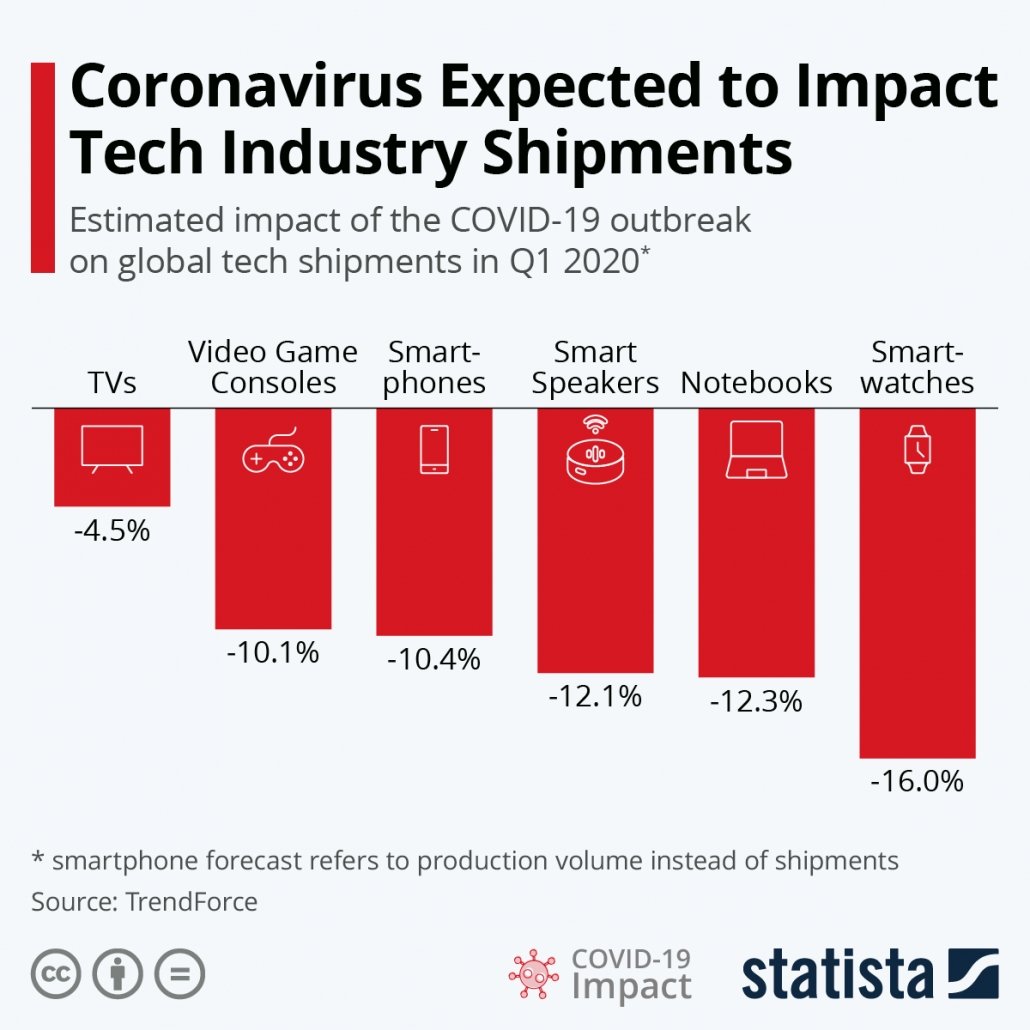
Figure 6 shows the likely impact on tech industry shipments out of China, as a result of coronavirus.

Except for Samsung who now do most of their production in Vietnam, big brands such as Apple and Huawei who do much of their production in China are likely to suffer.

The downstream effects could mean more expensive electronics good to consumers.

The Expected Impact of Coronavirus on Tech Industry Shipments
Figure 6: The expected impact of coronavirus on tech industry shipments

The coronavirus is most certainly having a profound effect on the global economy. It seems that the effects will not subside anytime soon, and we should prepare for recession.

The Problem with Conversion Rate

What’s the number 1 metric Digital Marketers talk about? Conversion rate.

It’s calculated as the number of sales over the number of visits

But have you ever thought about what conversion rate is really telling you?

Because of the way its calculated, a Higher Conversion Rate Doesn’t Always Mean Higher Performance!

Consider these 2 examples:

Week 1: 4% conversion rate. (50,000 visits, 2,000 sales)

Week 2: 10% conversion rate. (10,000 visits, 1,000 sales)

 So what’s the problem? The problem is that week 2 is telling us that we have a better engagement rate. But in reality, it has half the number of sales. It’s misleading us into thinking that conversion rate accurately reflects performance. 

So the lesson is – be careful when using conversion rate – look at how it’s been calculated, and don’t blindly use it as your main metric of success.

The Biggest Mistake in Content Marketing: Creating Negative Motives to Share

For viral content to succeed, it must create strong motives to share.

Soon after I developed the BUMP Viral Content algorithm I was sitting at my desk putting together some notes for a night class I was scheduled to teach, when I got a phone call. The woman calling introduced herself as Cheryl, and explained that she was the director of a boutique advertising agency in Sydney Australia. Her voice was rushed and forceful, and she sounded stressed. She explained she heard I was researching about viral movies, and wanted some advice.

I was flattered, and curious.

We chatted for about 5 minutes, whereafter some small talk and pleasantries she explained her predicament. She told me her agency had recently taken on a new client who wanted to launch a new brand of underwear. Her brief was to produce a high engagement advertisement. Or as she put it, something that would “go viral”. The problem was that the advertisement wasn’t creating buzz—after several months it had barely 400 views, and the client wanted answers. Cheryl had no idea why it wasn’t working, and wanted to find out if anything could be done to make it work.

Before the phone call ended I promised Cheryl I would have a look, though suspecting that it would be unlikely anything could be fixed.

I set aside my class preparation, and began watching. It was a personalized story type advertisement—a technique I had seen before where the viewer was asked to upload a photo of themselves that would be included in the story. I followed the instructions – uploaded a photo of myself, and selected male for my gender.

The movie loaded and revealed a dimly-lit studio apartment. A woman appeared from the shadows wearing lingerie. Gliding past a coffee table she picked up a magazine, headed towards her bed, and lay down. She opened the magazine, flicking through the pages before pausing. The camera zoomed in on the page she paused on. It was a fit male model wearing underwear. The camera zoomed in to the face—it was me! They had superimposed my face from the image I uploaded at the start.

The women began to touch herself, and moan… I felt awkward.

It was obvious to me why the ad had not gone viral. The problem was not the quality of the production—it was the content. Incorrectly assuming that sex sells was where it went wrong. Or more precisely, they had wrongly assumed that by showing provocative content it would somehow make people want to share it.

One of the reasons why something goes viral is because it motivates people to share it with other people. Worse than creating no motive for viewers to share, Cheryl’s advertisement actually created a negative motive to share. Most people would not feel comfortable sharing soft-pornography with people they knew, let alone publicly on social networks, since most people don’t want to risk their reputation, and there is no social capital available from sharing. Cheryl’s campaign actually created an incentive to not share.

The lesson to be learnt from Cheryl’s experience is important: For viral content to succeed, it must create strong motives to share.